Cathédrale Saint-Pierre et Saint-Paul
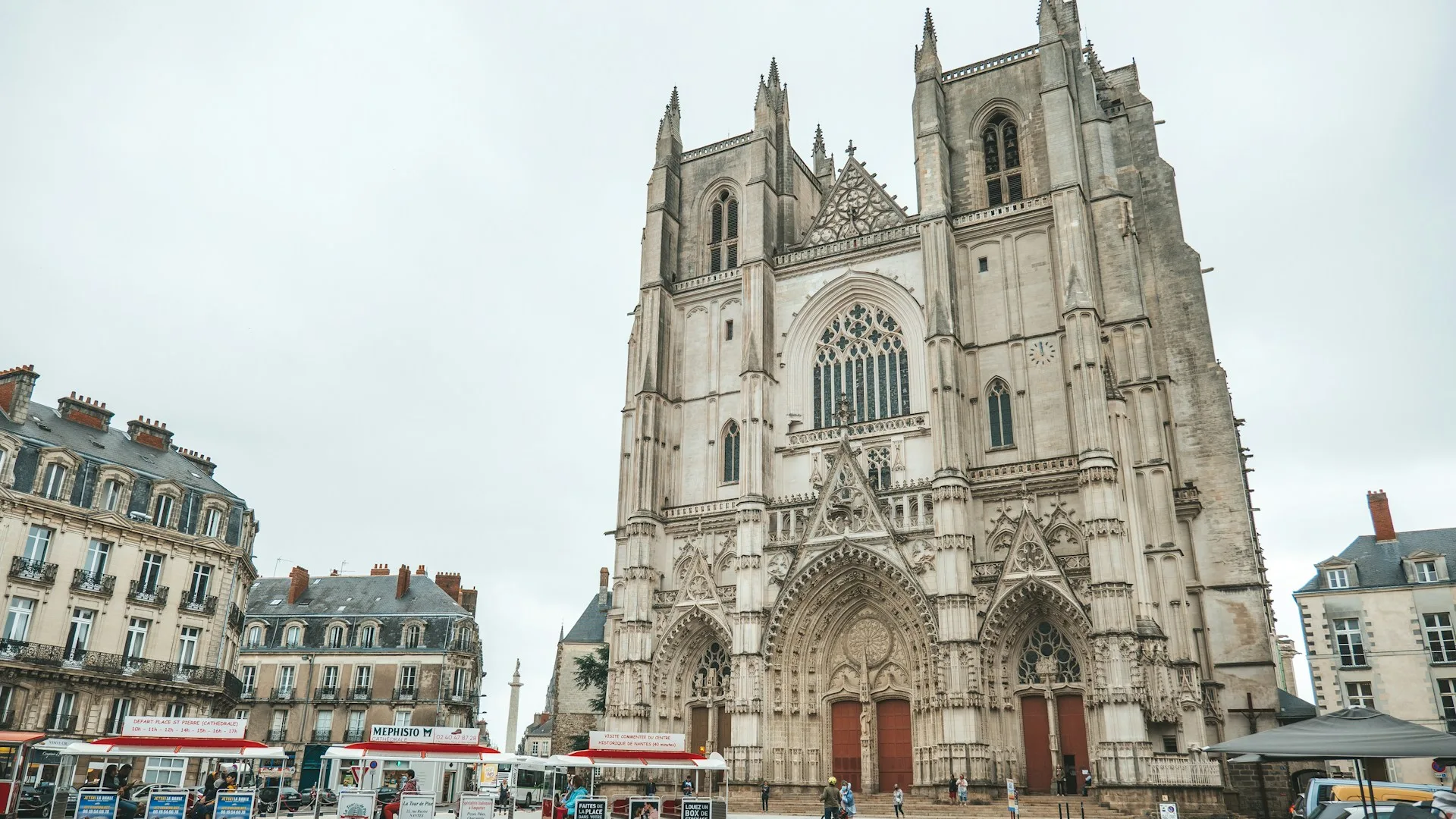
The Cathédrale Saint-Pierre et Saint-Paul in Nantes is a stunning example of Gothic architecture, renowned for its soaring nave, intricate façade, and centuries of history.
The Cathédrale Saint-Pierre et Saint-Paul stands as one of Nantes’ most iconic landmarks, a testament to the city’s religious and architectural heritage. Construction began in the 15th century and spanned nearly five centuries, resulting in a harmonious blend of late Gothic and Renaissance influences. Its striking white stone façade, twin towers, and intricate carvings draw visitors from around the world, while the vast interior impresses with soaring vaults and beautiful stained glass.
Beyond its architectural splendor, the cathedral is deeply woven into the city’s history. It houses the ornate tomb of François II, last Duke of Brittany, and his wife Marguerite de Foix—a masterpiece of Renaissance sculpture. Despite suffering damage during World War II and a major fire in 1972, the cathedral has been meticulously restored, preserving its role as a spiritual and cultural beacon in Nantes.
Visitor Information
| Opening Hours | Typically daily; check locally for current times |
|---|---|
| Admission | Free (donations welcome) |
| Accessibility | Wheelchair accessible (main areas) |
| Suggested Visit Duration | 45–60 minutes |
1434
Construction Begins
The first stone of the cathedral is laid, marking the start of centuries-long construction.
1891
Completion
After nearly 457 years, the cathedral is finally completed.
1972
Fire and Restoration
A major fire damages the roof and interior; extensive restoration follows.
2020
Recent Fire
Another fire causes damage to the organ and stained glass, prompting further restoration efforts.
Tips
- Arrive early or late in the day to avoid crowds and enjoy a quieter visit.
- Take time to admire the Tomb of François II, a highlight of Renaissance art in Brittany.
- Check for special events or concerts, which are occasionally held in the cathedral’s remarkable acoustics.
Is photography allowed inside the cathedral?
Non-flash photography is generally permitted for personal use, but check for signs or ask staff for any restrictions.
Are guided tours available?
Guided tours may be offered seasonally or for groups; inquire locally or at the tourist office for current options.
Is the cathedral accessible for visitors with reduced mobility?
The main areas are accessible, though some sections may have steps or uneven flooring.
More places you may like
Related destinations
- Musée d'Arts de Nantes The Musée d'Arts de Nantes is a premier fine arts museum in western France, renowned for its extensive collection spanning from the 13th century to contemporary works. Its elegant galleries and innovative exhibitions make it a cultural highlight in Nantes. Museum
Discover close-by destinations
Nearby places