
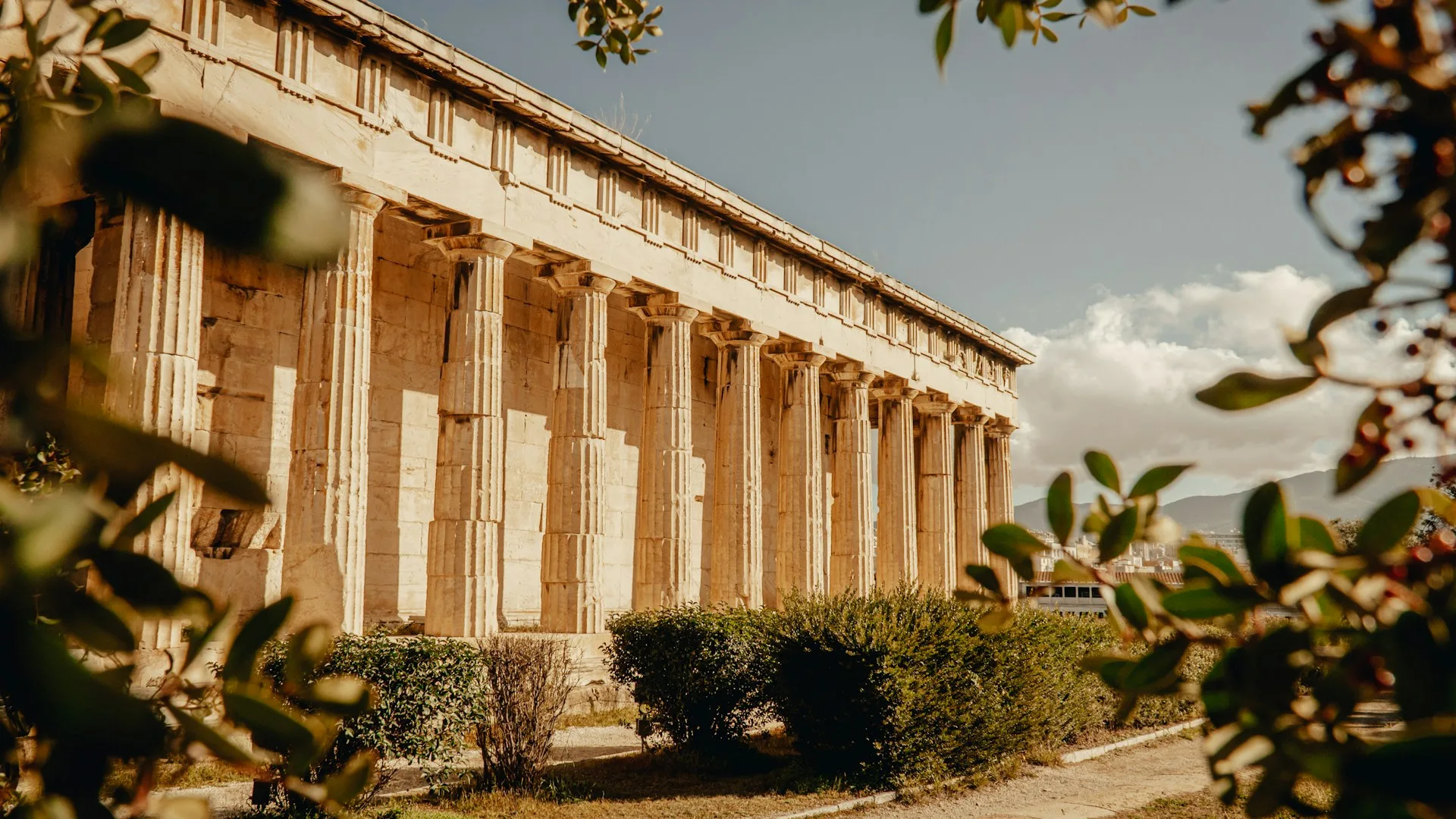
एथेंस का प्राचीन अगोरा
एथेंस का प्राचीन अगोरा ग्रीस के सबसे महत्वपूर्ण पुरातात्विक स्थलों में से एक है, जो प्राचीन एथेनियनों के दैनिक जीवन की जीवंत झलक प्रदान करता है।
एथेंस का प्राचीन अगोरा ग्रीस के सबसे महत्वपूर्ण पुरातात्विक स्थलों में से एक है, जो प्राचीन एथेनियनों के दैनिक जीवन की जीवंत झलक प्रदान करता है। कभी राजनीतिक सभाओं, वाणिज्यिक व्यापार और सामाजिक संवाद का हलचल भरा केंद्र, अगोरा वह स्थान था जहां लोकतंत्र का जन्म हुआ और दार्शनिक विचार फलित हुए। आज, आगंतुक मंदिरों, स्तोआस और प्रशासनिक भवनों के अवशेषों के बीच टहलते हैं, जो जैतून के पेड़ों और इतिहास की गूंज से घिरे हैं।
स्थल की मुख्य विशेषताओं में उल्लेखनीय रूप से पुनर्स्थापित Stoa of Attalos शामिल है, जिसमें अब Ancient Agora का संग्रहालय स्थित है, और अच्छी तरह संरक्षित Temple of Hephaestus, जो डोरिक वास्तुकला का एक बेहतरीन उदाहरण है। अगोरा पश्चिमी सभ्यता की उत्पत्ति पर विचार करने के लिए एक शांतिपूर्ण और प्रेरणादायक स्थान प्रदान करता है, जो आधुनिक एथेंस के केंद्र की जीवंतता से कुछ कदम दूर है।
आगंतुक जानकारी
| खुलने का समय | आमतौर पर दैनिक 8:00–20:00 (मौसमी परिवर्तन; स्थानीय जांच करें) |
|---|---|
| प्रवेश शुल्क | सामान्य प्रवेश; छूट उपलब्ध हैं। वर्तमान कीमतों के लिए स्थानीय जांच करें। |
| दौरे की अवधि | 1–2 घंटे |
| सुविधाजनक पहुँच | आंशिक रूप से सुलभ; कुछ क्षेत्रों में असमान भूभाग |
ऐतिहासिक समयरेखा
6वीं शताब्दी ईसा पूर्व
स्थापना
एथेंस का अगोरा सार्वजनिक सभा, बाजार और त्योहारों का केंद्र बनता है।
2वीं शताब्दी ईसा पूर्व
Stoa of Attalos का निर्माण
पेरगामोन के राजा अत्तालोस द्वितीय ने भव्य स्तोआ का निर्माण किया, जो छायादार मार्ग और दुकानों के लिए था।
1वीं शताब्दी ईसा पूर्व
रोमन युग के परिवर्तन
रोमन शासन के तहत अगोरा का विस्तार और नवीनीकरण किया गया, नए संरचनाओं और स्मारकों के साथ।
20वीं शताब्दी ईस्वी
खुदाई और पुनर्स्थापन
प्रमुख पुरातात्विक खुदाई शुरू हुई, जिसके परिणामस्वरूप Stoa of Attalos का पुनर्स्थापन और स्थल का संरक्षण हुआ।
सुझाव
- भीड़ और दोपहर की गर्मी से बचने के लिए सुबह जल्दी या देर दोपहर में जाएं।
- आरामदायक जूते पहनें, क्योंकि स्थल बड़ा है और रास्ते असमान हैं।
- अपने दौरे को पास के आकर्षणों जैसे Acropolis और Plaka पड़ोस के साथ जोड़ें, ताकि पूरा दिन घूमने का आनंद लें।
क्या Ancient Agora, Acropolis टिकट में शामिल है?
हाँ, एथेंस के प्रमुख पुरातात्विक स्थलों के लिए संयुक्त टिकट में आमतौर पर Ancient Agora शामिल होता है। वर्तमान टिकट विकल्पों के लिए स्थानीय जांच करें।
क्या मार्गदर्शित पर्यटन उपलब्ध हैं?
हाँ, साइट पर और विभिन्न एजेंसियों के माध्यम से मार्गदर्शित पर्यटन उपलब्ध हैं। विशेष रूप से उच्च मौसम में अग्रिम बुकिंग की सलाह दी जाती है।
क्या मैं Ancient Agora संग्रहालय में जा सकता हूँ?
हाँ, संग्रहालय पुनर्स्थापित Stoa of Attalos के भीतर स्थित है और साइट प्रवेश के साथ शामिल है।
और जगहें जो आपको पसंद आ सकती हैं
संबंधित गंतव्य

पास के गंतव्य खोजें