
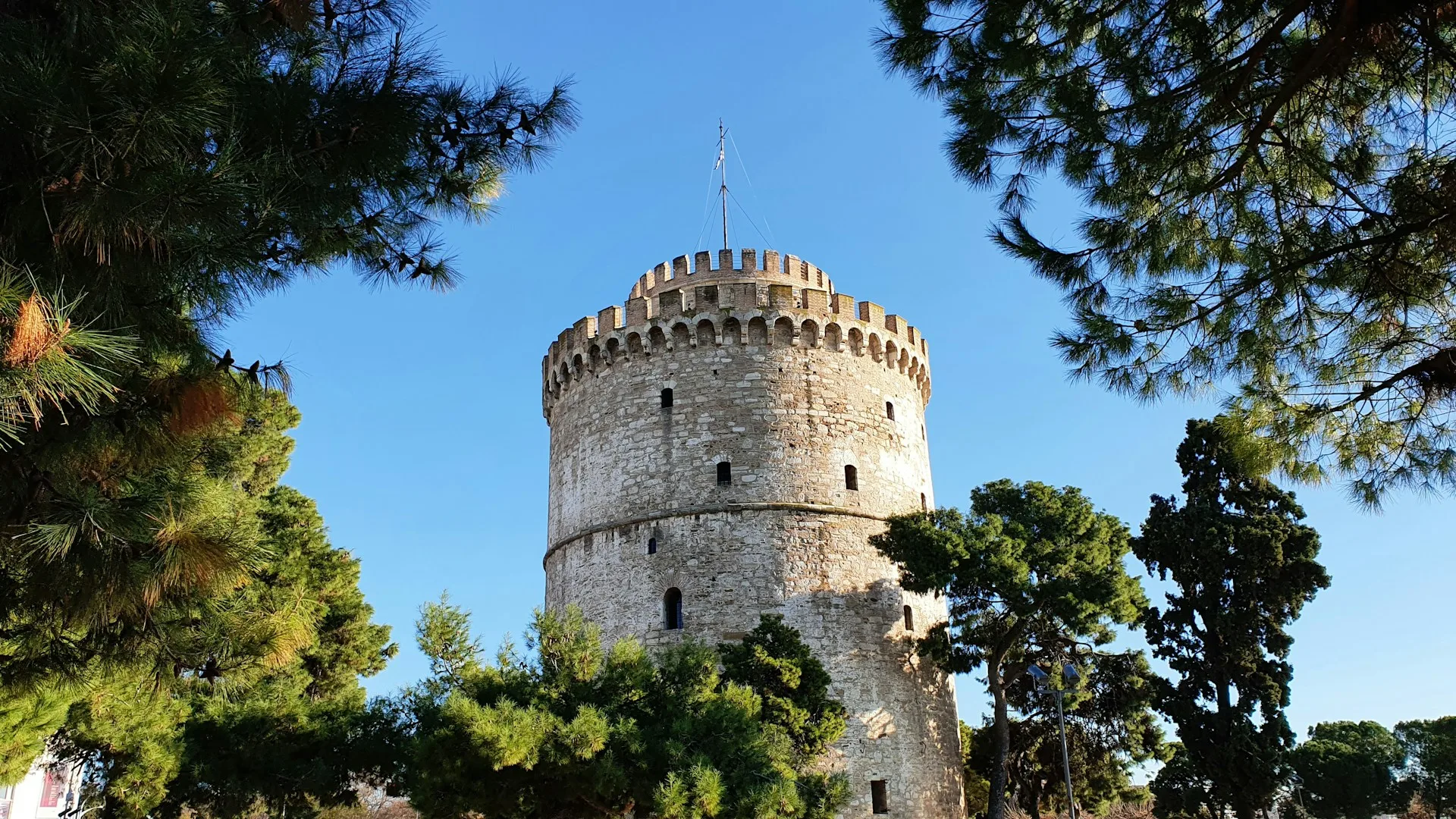
Rotunda of Galerius
The Rotunda of Galerius is a monumental Roman structure in Thessaloniki, Greece, renowned for its imposing dome and layered religious history.
The Rotunda of Galerius stands as one of Thessaloniki’s most enduring monuments, bearing witness to the city’s complex and multicultural past. Built in the early 4th century AD, this massive cylindrical structure was originally commissioned by the Roman emperor Galerius, likely intended as his mausoleum or possibly as a temple. Its imposing brickwork walls, 30 meters high and over 6 meters thick, support a vast dome that dominates the skyline, making it a striking example of Roman engineering.
Over the centuries, the Rotunda has been transformed to suit the spiritual needs of Thessaloniki’s changing populations. It became a Christian church in the late 4th century, adorned with exquisite mosaics that still shimmer in the filtered light. During Ottoman rule, it was converted into a mosque, a period marked by the addition of a minaret that still stands today. Now a UNESCO World Heritage Site, the Rotunda is open to visitors eager to explore its unique blend of Roman, Byzantine, and Ottoman influences.
Visitor Information
| Opening Hours | Check locally; hours may vary by season and day |
|---|---|
| Admission | Check locally; discounts may apply for students and seniors |
| Suggested Visit Duration | 45 minutes – 1 hour |
A Timeline of the Rotunda
306 AD
Construction Begins
Emperor Galerius orders the construction of the Rotunda, possibly as his mausoleum or a temple.
Late 4th century
Converted to a Christian Church
The Rotunda is consecrated as a Christian church, and elaborate mosaics are added.
1590
Converted to a Mosque
Under Ottoman rule, the Rotunda becomes a mosque and a minaret is constructed.
1912
Reconverted to a Christian Church
Following the liberation of Thessaloniki, the Rotunda returns to Christian use, and later becomes a museum.
Tips for Visiting
Tips
- Bring a camera—the interior mosaics and dramatic dome make for stunning photographs.
- Wear comfortable shoes; the stone floors can be uneven and slippery.
- Combine your visit with a walk to the nearby Arch of Galerius for a deeper look at Thessaloniki’s Roman heritage.
Is the Rotunda accessible for visitors with mobility issues?
Access may be limited due to steps and uneven surfaces; check locally for the latest accessibility information.
Are guided tours available?
Guided tours are sometimes offered; inquire at the entrance or with local tour providers.
Can I take photographs inside the Rotunda?
Photography is generally allowed, but flash and tripods may be restricted; check posted signs.
More places you may like
Related destinations
Discover close-by destinations
Nearby places