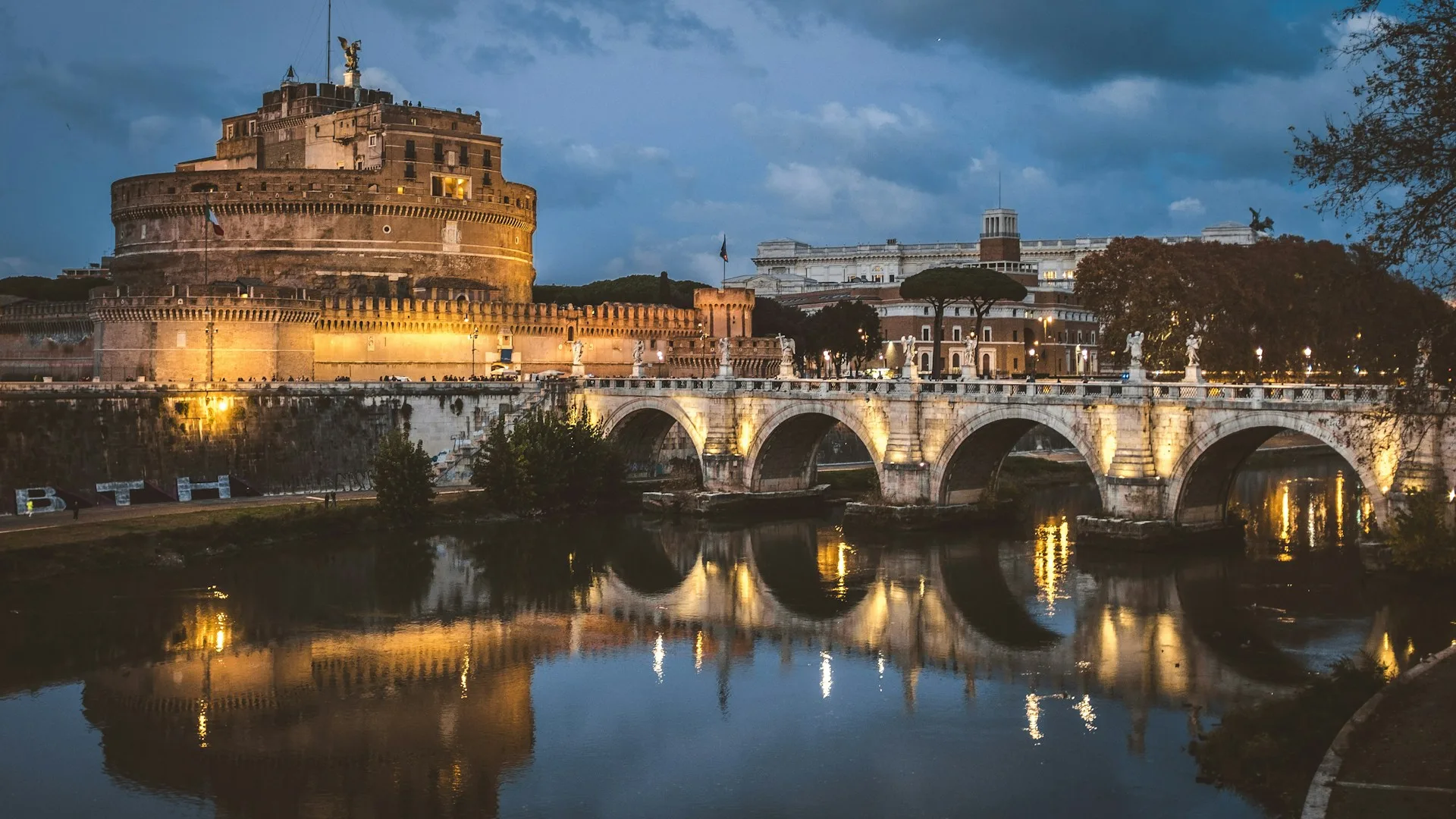
Engelsburg
Das Castel Sant'Angelo, ursprünglich als Hadrians Mausoleum erbaut, ist ein beeindruckendes Wahrzeichen Roms mit reicher Geschichte als kaiserliches Grab, militärische Festung und päpstliche Residenz.
Das Castel Sant'Angelo, auch bekannt als Hadrians Mausoleum, steht als Zeugnis der vielschichtigen Geschichte Roms. Im 2. Jahrhundert n. Chr. als monumentales Grab für Kaiser Hadrian und seine Familie errichtet, entwickelte sich das Bauwerk später zu einer militärischen Festung, einer päpstlichen Residenz und sogar einem Gefängnis. Seine imposante zylindrische Form und die strategische Lage am Fluss machen es sofort erkennbar, während die Panoramablicke von den oberen Terrassen eine einzigartige Perspektive auf die Ewige Stadt bieten.
Heute ist das Castel Sant'Angelo ein Museum, das Besucher einlädt, seine labyrinthartigen Korridore, prunkvollen päpstlichen Gemächer und umfangreiche Sammlung von Waffen und Kunst zu erkunden. Die Festung ist durch den Passetto di Borgo mit dem Vatikan verbunden, einem geheimen Durchgang, den Päpste in Gefahrensituationen nutzten. Ob Sie Geschichtsinteressierter sind oder einfach nur atemberaubende Ausblicke suchen, das Castel Sant'Angelo ist ein Muss in Rom.
Besucherinformationen
| Öffnungszeiten | In der Regel täglich geöffnet; saisonale Zeiten vor Ort prüfen. |
|---|---|
| Eintritt | Eintrittspreis wird erhoben; Ermäßigungen für EU-Bürger und Kinder verfügbar. Aktuelle Preise auf der offiziellen Webseite prüfen. |
| Dauer | 1–2 Stunden empfohlen |
| Barrierefreiheit | Teilweise zugänglich für Besucher mit eingeschränkter Mobilität; einige Bereiche mit Treppen. |
135–139 n. Chr.
Errichtung des Mausoleums
Im Auftrag von Kaiser Hadrian als großes Grab für sich und seine Familie.
401 n. Chr.
Umwandlung zur Festung
Umgebaut zu einer militärischen Festung zum Schutz Roms in turbulenten Zeiten.
1277
Päpstliche Festung
Mit dem Vatikan durch den Passetto di Borgo verbunden, diente als Zufluchtsort für Päpste.
1901
Eröffnung als Museum
Das Castel Sant'Angelo wurde ein öffentliches Museum, das seine reiche Geschichte und Kunst zeigt.
Tipps
- Besteigen Sie die Terrasse für Panoramablicke auf Rom und den Vatikan.
- Kaufen Sie Tickets in der Hochsaison im Voraus, um lange Warteschlangen zu vermeiden.
- Suchen Sie nach dem Passetto di Borgo, dem geheimen Durchgang, der die Burg mit dem Vatikan verbindet.
Kann ich Tickets vor Ort kaufen oder sollte ich im Voraus buchen?
Tickets können vor Ort gekauft werden, aber eine Vorausbuchung wird empfohlen, besonders in Stoßzeiten.
Ist das Castel Sant'Angelo für Kinder geeignet?
Ja, Kinder erkunden die Festung oft gerne, aber beachten Sie, dass einige Bereiche steile Treppen und unebene Böden haben.
Gibt es Führungen?
Ja, Führungen sind in mehreren Sprachen verfügbar und können Ihr Verständnis der Geschichte des Ortes vertiefen.
Weitere Orte, die dir gefallen könnten
Ähnliche Reiseziele
Entdecke nahegelegene Reiseziele
In der Nähe