Kuil Fushimi Inari
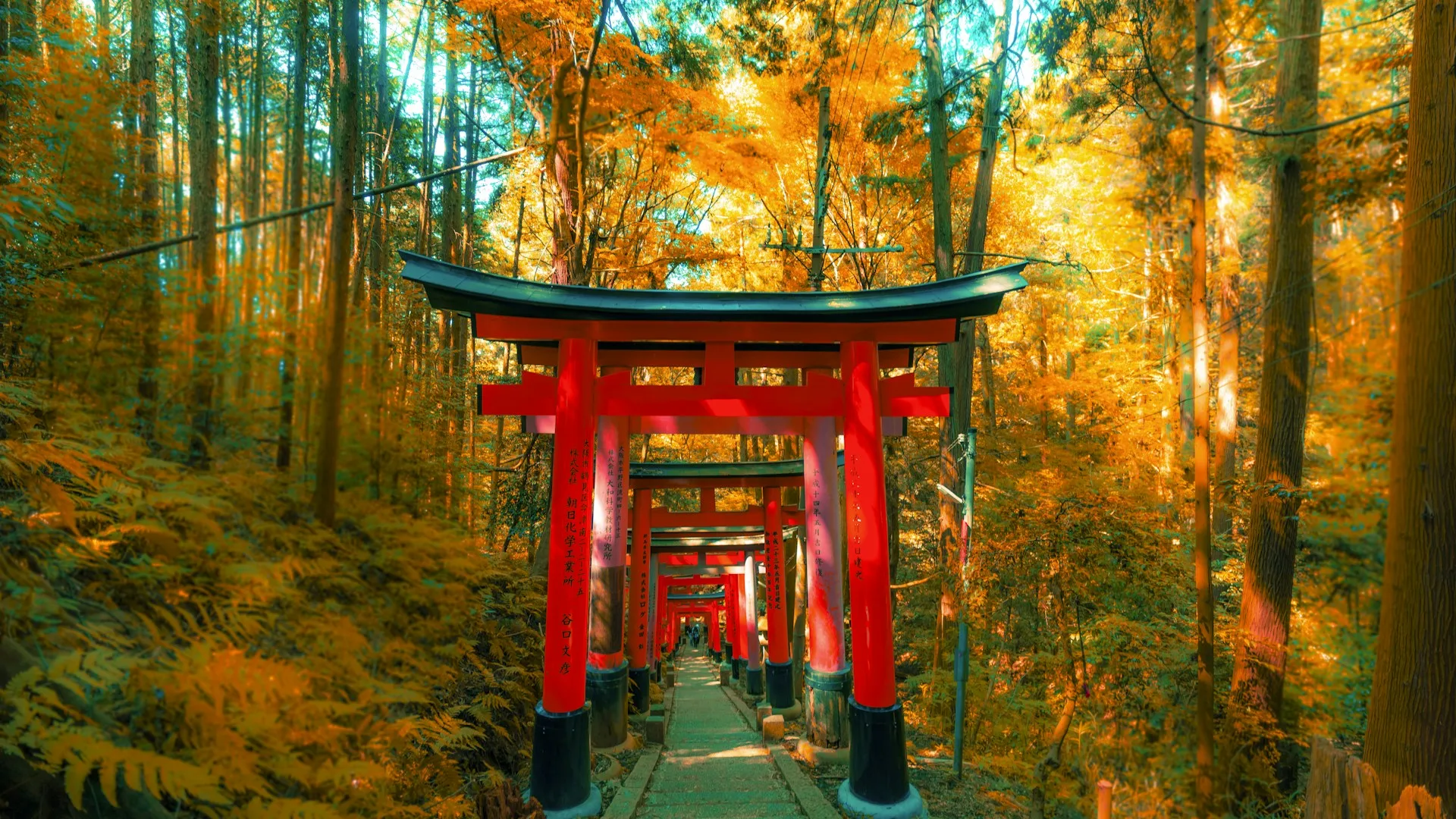
Kuil Fushimi Inari di Kyoto terkenal dengan terowongan panjang gerbang torii merah jingga yang ikonik, tempat suci Shinto yang didedikasikan untuk dewa padi dan kemakmuran.
Terletak di kaki Gunung Inari yang suci di Kyoto, Kuil Fushimi Inari adalah salah satu landmark paling terkenal dan memukau secara visual di Jepang. Didirikan pada abad ke-8, kuil ini didedikasikan untuk Inari, dewa Shinto padi, pertanian, dan kemakmuran. Fitur paling khas adalah jalur tak berujung lebih dari 10.000 gerbang torii merah jingga yang disumbangkan oleh individu dan bisnis sebagai tanda pengabdian dan rasa syukur. Gerbang-gerbang ini membentuk terowongan atmosferik yang berkelok naik di lereng berhutan, menciptakan jalur mempesona bagi pengunjung dan pemuja.<\/p>
Selain koridor torii yang terkenal, kompleks kuil ini juga mencakup sub-kuil yang lebih kecil, jalur hutan yang tenang, dan patung rubah—yang dipercaya sebagai utusan Inari. Pengunjung dapat menjelajah dengan tempo sendiri, mulai dari kuil utama yang ramai di pintu masuk hingga puncak Gunung Inari yang tenang, yang menawarkan pemandangan panorama Kyoto. Kuil Fushimi Inari buka sepanjang tahun dan sangat populer pada pagi hari dan sore hari, saat keramaian berkurang dan cahaya menembus indah melalui gerbang-gerbang.<\/p>
Informasi Penting
| Jam Buka | Buka 24 jam; periksa secara lokal untuk variasi musiman |
|---|---|
| Tiket Masuk | Gratis |
| Waktu Terbaik Berkunjung | Pagi hari atau sore hari |
| Durasi Kunjungan Rata-rata | 1,5–3 jam |
711
Pendirian Kuil Fushimi Inari
Kuil didirikan di Gunung Inari, didedikasikan untuk dewa Shinto padi dan kemakmuran.
1499
Penyelesaian Struktur Kuil Utama
Honden (balai utama) saat ini dibangun, mencerminkan gaya arsitektur Shinto klasik.
Abad ke-17–19
Donasi Gerbang Torii Meningkat
Ribuan gerbang torii merah jingga disumbangkan oleh individu dan bisnis, menciptakan efek terowongan ikonik.
Masa Kini
Landmark Utama Kyoto
Kuil Fushimi Inari tetap menjadi tempat ibadah yang hidup dan destinasi wajib bagi para pelancong.
Tips Berkunjung ke Kuil Fushimi Inari
Tips
- Mulailah kunjungan Anda pagi-pagi untuk menghindari keramaian dan menikmati jalan-jalan tenang melalui gerbang torii.
- Kenakan sepatu yang nyaman, karena pendakian ke puncak melibatkan banyak anak tangga dan medan yang tidak rata.
- Bawa air dan camilan jika Anda berencana berjalan sepanjang jalur, karena fasilitas terbatas di sepanjang rute.
Berapa lama waktu yang dibutuhkan untuk berjalan ke puncak Gunung Inari?
Pendakian pulang-pergi ke puncak dan kembali biasanya memakan waktu 2–3 jam, tergantung kecepatan dan berhenti Anda di sepanjang jalan.
Apakah ada biaya masuk ke Kuil Fushimi Inari?
Tidak, masuk ke Kuil Fushimi Inari dan jalurnya gratis.
Apakah kuil dan jalurnya dapat diakses pada malam hari?
Ya, Kuil Fushimi Inari buka 24 jam. Namun, jalur kurang diterangi setelah gelap, jadi disarankan berhati-hati ekstra.
Temukan destinasi di sekitar Anda
Tempat terdekat