
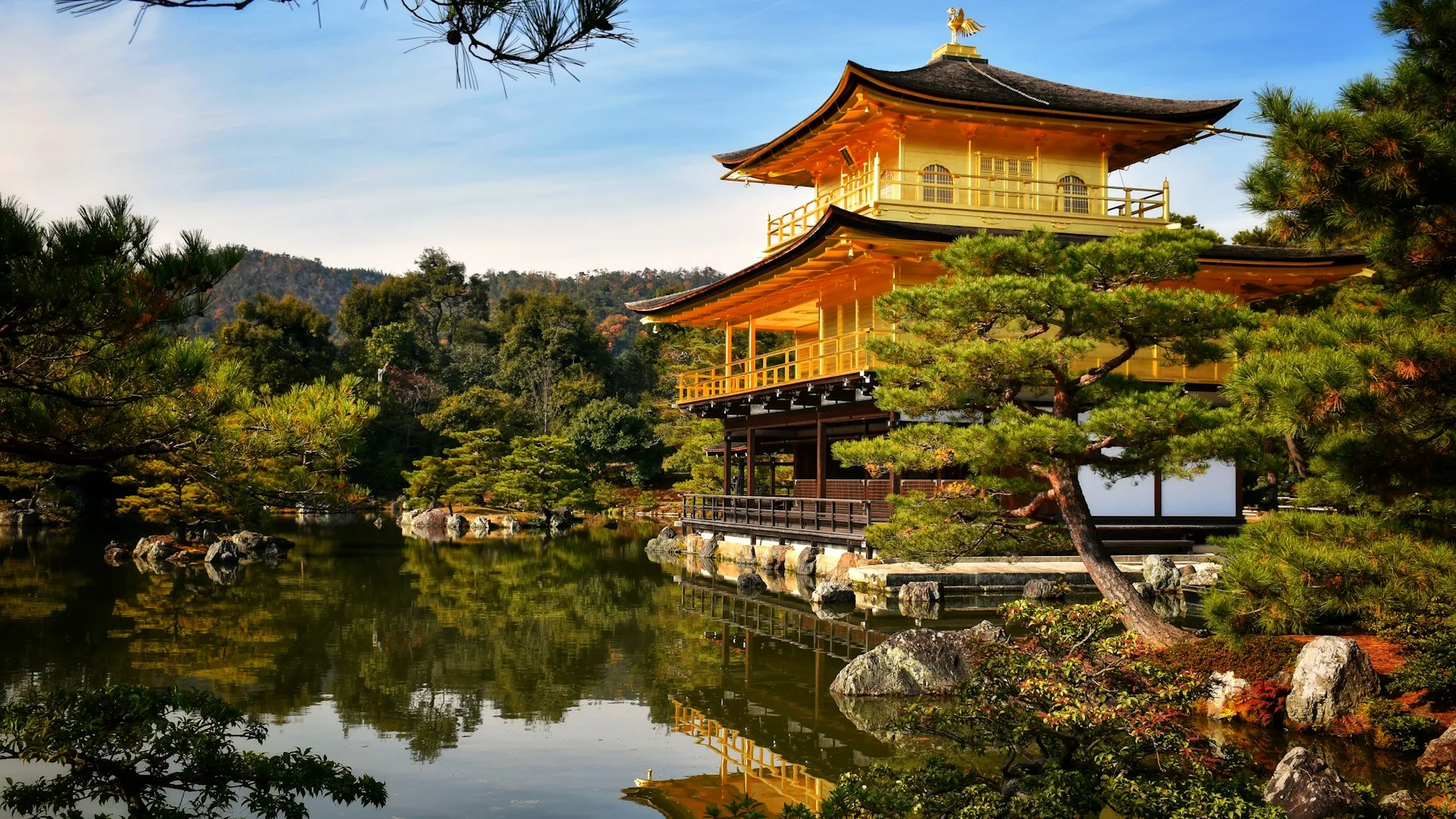
किनकाकु-जी (गोल्डन पवेलियन)
किंकाकु-जी, जिसे आधिकारिक रूप से रोकुओन-जी कहा जाता है, क्योटो के सबसे प्रसिद्ध ऐतिहासिक स्थलों में से एक है। इसका सुनहरी पत्ती से ढका हुआ ज़ेन मंदिर क्योटो की समृद्ध सांस्कृतिक विरासत का प्रतीक है।
किंकाकु-जी, जिसे आधिकारिक रूप से रोकुओन-जी कहा जाता है, क्योटो के सबसे प्रसिद्ध ऐतिहासिक स्थलों में से एक है। मंदिर की ऊपर की दो मंजिलें चमकीली सुनहरी पत्ती से पूरी तरह ढकी हुई हैं, जो इसे घेरे हुए दर्पण जैसे तालाब में खूबसूरती से प्रतिबिंबित करती हैं। मूल रूप से इसे 14वीं सदी के अंत में शोगुन अशिकागा योशिमित्सु के सेवानिवृत्ति विला के रूप में बनाया गया था, बाद में इसे ज़ेन मंदिर में परिवर्तित कर दिया गया और यह क्योटो की समृद्ध सांस्कृतिक विरासत का एक स्थायी प्रतीक बन गया।
मंदिर परिसर को बारीकी से सजाया गया है, जिसमें पैदल चलने के रास्ते, पारंपरिक बागान और शांत चाय घर शामिल हैं। आगंतुक हरे-भरे परिवेश में टहल सकते हैं, प्रभावशाली वास्तुकला की प्रशंसा कर सकते हैं, और उस शांति का अनुभव कर सकते हैं जिसने सदियों से कवियों और कलाकारों को प्रेरित किया है। किंकाकु-जी खासकर शरद ऋतु में बेहद सुंदर होता है, जब मेपल के पत्ते सुनहरे ढांचे को घेरते हैं, और सर्दियों में, जब बर्फ इसकी सुनहरी छत पर बिछ जाती है।
आगंतुक जानकारी
| खुलने का समय | आमतौर पर 9:00–17:00; मौसमी बदलाव के लिए स्थानीय जांच करें |
|---|---|
| प्रवेश शुल्क | स्थानीय जांच करें; सामान्य वयस्क शुल्क लागू |
| दौरे की अवधि | 1–1.5 घंटे |
| आगंतुक का सर्वोत्तम समय | सुबह जल्दी या देर दोपहर; शरद ऋतु और सर्दियों में अनूठा दृश्य मिलता है |
1397
मूल निर्माण
किंकाकु-जी को शोगुन अशिकागा योशिमित्सु के सेवानिवृत्ति विला के रूप में बनाया गया था।
1422
ज़ेन मंदिर में परिवर्तित
योशिमित्सु की मृत्यु के बाद, विला को ज़ेन बौद्ध मंदिर में बदल दिया गया।
1950
आग से नष्ट
मंदिर को एक भिक्षु द्वारा जलाया गया; वर्तमान संरचना 1955 में सावधानीपूर्वक पुनर्निर्मित की गई है।
1994
युनेस्को विश्व विरासत स्थल
किंकाकु-जी को 'प्राचीन क्योटो के ऐतिहासिक स्मारक' युनेस्को स्थल के हिस्से के रूप में नामित किया गया।
सुझाव
- भीड़ से बचने और अधिक शांत वातावरण का आनंद लेने के लिए जल्दी पहुंचें।
- फोटोग्राफी बाहरी क्षेत्रों में अनुमति है, लेकिन पवेलियन के अंदर प्रवेश की अनुमति नहीं है।
- निकास के पास छोटे चाय बागान को न चूकें, जहाँ पारंपरिक मैच और मिठाइयाँ परोसी जाती हैं।
क्या आगंतुक गोल्डन पवेलियन के अंदर प्रवेश कर सकते हैं?
नहीं, पवेलियन के अंदर प्रवेश की अनुमति नहीं है। आगंतुक तालाब के चारों ओर निर्धारित रास्तों और दर्शनीय स्थानों से इसका आनंद ले सकते हैं।
क्या किंकाकु-जी सार्वजनिक परिवहन से पहुंचा जा सकता है?
हाँ, किंकाकु-जी क्योटो स्टेशन और अन्य केंद्रीय स्थानों से बस द्वारा पहुंचा जा सकता है। सबसे सुविधाजनक मार्गों के लिए स्थानीय समय सारिणी जांचें।
क्या अंग्रेज़ी भाषा में गाइड या सामग्री उपलब्ध है?
प्रवेश द्वार पर अंग्रेज़ी में बुनियादी जानकारी उपलब्ध है, और कुछ निर्देशित पर्यटन में किंकाकु-जी शामिल होता है।
और जगहें जो आपको पसंद आ सकती हैं
संबंधित गंतव्य
पास के गंतव्य खोजें
नज़दीकी जगहें