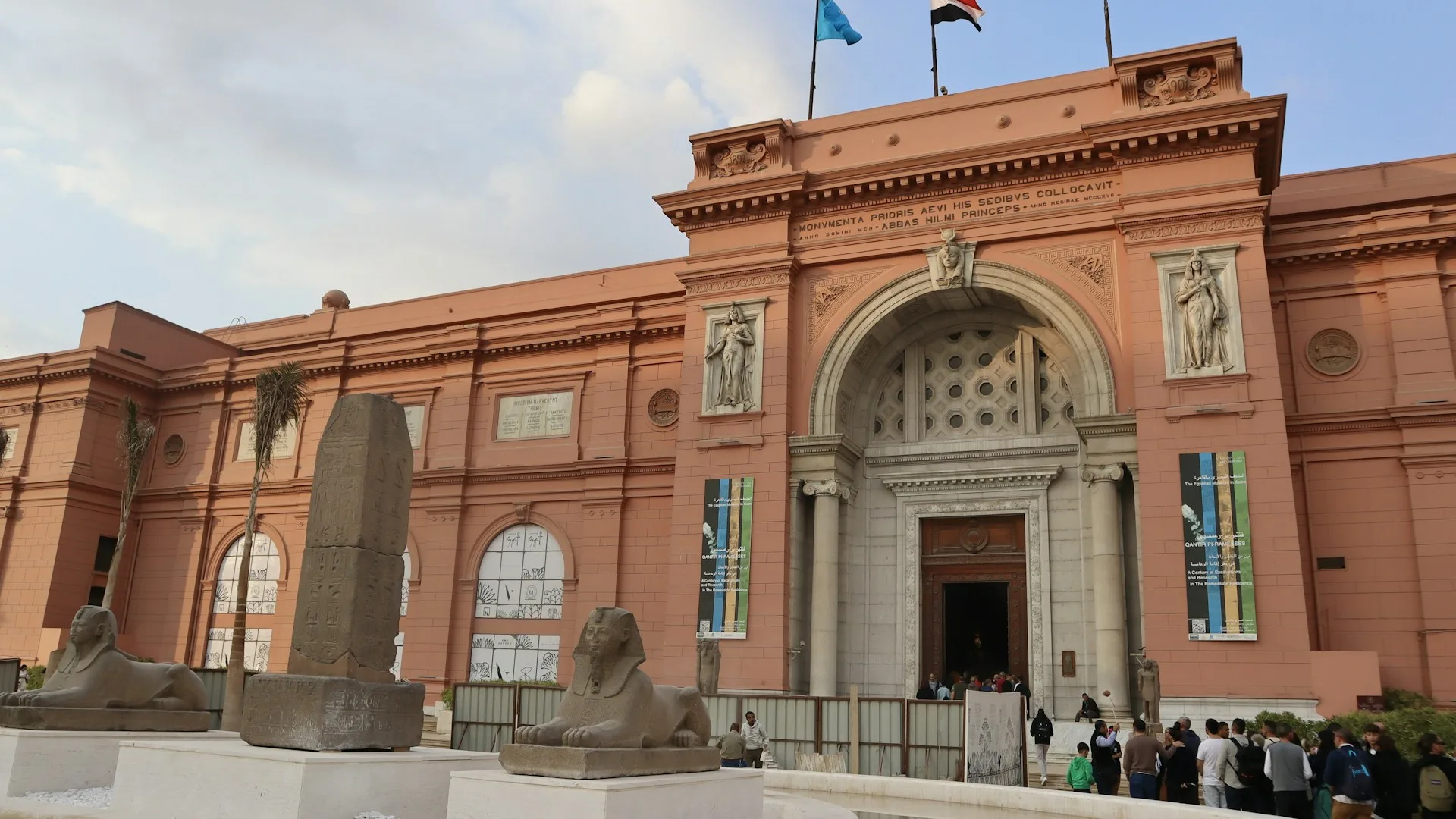
The Egyptian Museum
The Egyptian Museum in Cairo houses the world’s most extensive collection of ancient Egyptian antiquities, including treasures from Tutankhamun’s tomb.
The Egyptian Museum stands as a monumental gateway to Egypt’s ancient past, located in the heart of Cairo’s bustling Tahrir Square. Opened in 1902, the museum is home to over 120,000 artifacts, making it one of the world’s most significant collections of Pharaonic antiquities. Visitors are greeted by grand halls filled with statues, sarcophagi, and intricate relics, each narrating a chapter of Egypt’s millennia-old civilization.
Among the museum’s most celebrated treasures are the golden funerary mask and artifacts of Tutankhamun, as well as royal mummies and intricate jewelry. The museum’s layout spans two floors, with the ground floor dedicated to a chronological journey through Egypt’s dynastic history and the upper floor housing the famed Tutankhamun Galleries and Greco-Roman artifacts. Whether you are a history enthusiast or a casual traveler, the Egyptian Museum offers an unparalleled window into the grandeur and mystery of ancient Egypt.
Visitor Information
| Opening Hours | Typically 9:00 AM – 5:00 PM; check locally for updates and holiday hours |
|---|---|
| Admission | Fees vary by nationality and age; check locally for current prices |
| Location | Tahrir Square, Cairo, Egypt |
| Recommended Visit Duration | 2–3 hours |
1835
First Egyptian Museum Established
The first Egyptian Museum was founded in Boulaq to house the growing collection of antiquities.
1902
Current Museum Inaugurated
The Egyptian Museum building in Tahrir Square officially opened, becoming the primary home for Egypt’s ancient treasures.
1922
Tutankhamun’s Tomb Discovered
Artifacts from the tomb of Tutankhamun were added, drawing worldwide attention to the museum’s collection.
2020s
Collections Transition
Some artifacts began moving to the new Grand Egyptian Museum, but the original museum remains a vital institution.
Tips for Visiting
Tips
- Arrive early to avoid crowds and maximize your time with the exhibits.
- Consider hiring a licensed guide for deeper insight into the museum’s highlights.
- Photography may be restricted in some areas; check signage and staff instructions.
Frequently Asked Questions
Are all artifacts original?
The vast majority of items on display are authentic ancient artifacts, though some replicas may be used for preservation or educational purposes.
Is the museum accessible for visitors with mobility needs?
Some accessibility features are available, but the historic building may have limitations. Check locally for current facilities and support.
Can I buy tickets online?
Online ticketing options may be available; check the official website or local sources for the latest information.
Discover close-by destinations
Nearby places