
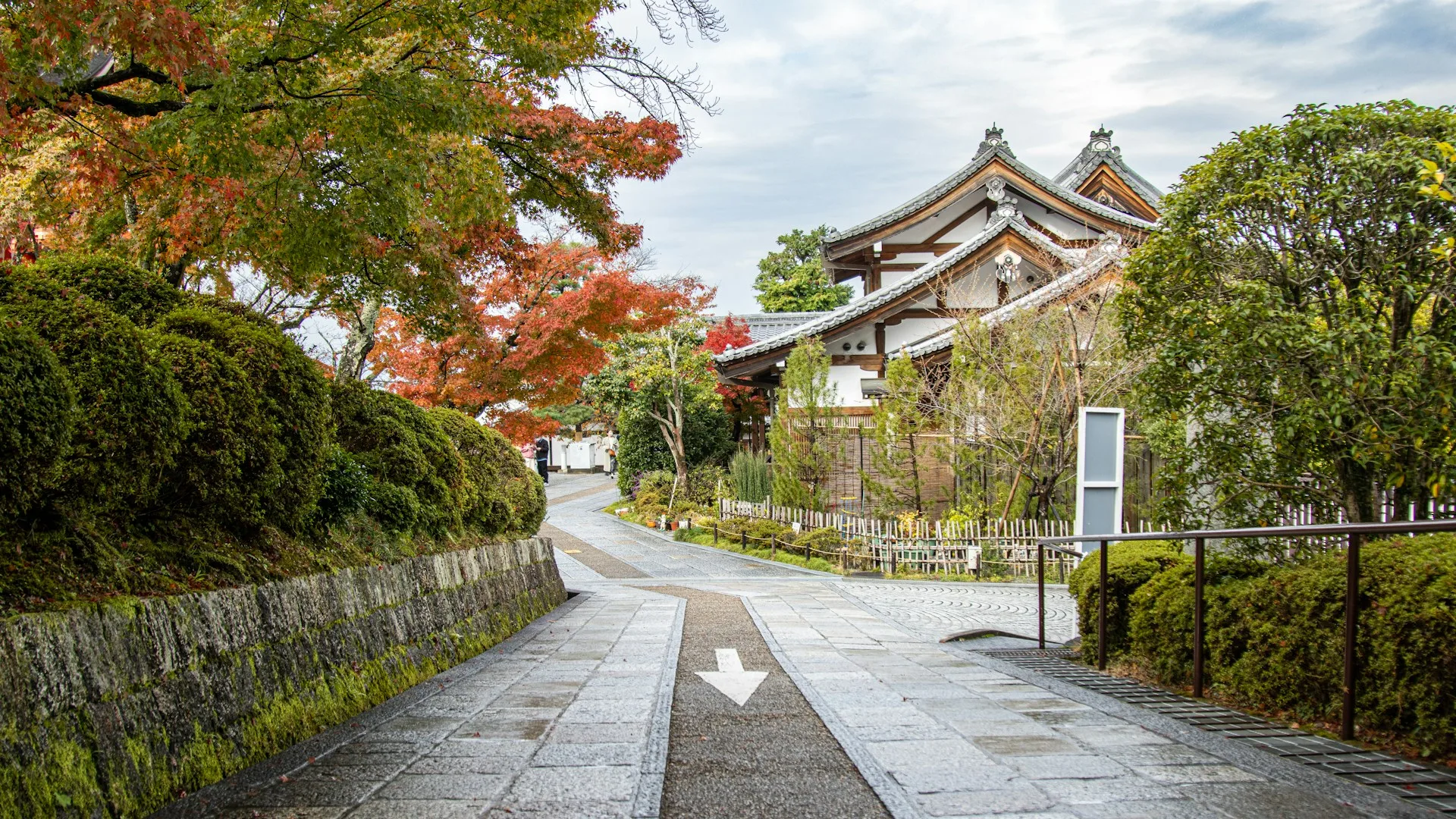
Philosopher's Path
The Philosopher's Path is a scenic, cherry tree-lined walkway along a canal in Kyoto, Japan, renowned for its tranquil beauty and seasonal blooms.
The Philosopher's Path (Tetsugaku-no-Michi) is a beloved pedestrian walkway tracing the canal between Ginkaku-ji (Silver Pavilion) and Nanzen-ji Temple in Kyoto's northern Higashiyama district. Named after the influential philosopher Nishida Kitaro, who is said to have meditated here during his daily walks, the path offers a tranquil escape from the city's bustle, especially during cherry blossom season when hundreds of sakura trees burst into bloom.
Stretching approximately two kilometers, the path meanders past traditional homes, quaint cafes, and small shrines, inviting visitors to slow down and reflect. Whether you visit in spring for the blossoms, in autumn for vibrant foliage, or any time of year for a peaceful stroll, the Philosopher's Path captures the contemplative spirit of Kyoto and provides a gentle immersion into the city's natural and cultural beauty.
Essential Information
| Length | Approximately 2 km (1.2 miles) |
|---|---|
| Typical Duration | 30–60 minutes |
| Best Time to Visit | Late March–early April (cherry blossoms), late November (autumn foliage) |
| Hours | Open 24 hours; check locally for nearby temple hours |
| Entry Fee | Free |
A Walk Through Time
1912
Canal Construction
The canal along which the Philosopher's Path runs was completed, originally built for water supply and irrigation.
Early 20th Century
Nishida Kitaro's Walks
The famed philosopher Nishida Kitaro used this route for daily meditation, inspiring the path's name.
1972
Path Officially Named
The walkway was formally designated as the Philosopher's Path and enhanced for public enjoyment.
Present Day
Beloved Kyoto Landmark
The path is now a celebrated destination for locals and visitors, especially during cherry blossom season.
Tips for Visiting
Tips
- Arrive early in the morning during cherry blossom season to enjoy the path before crowds gather.
- Wear comfortable shoes, as the full walk takes about an hour at a leisurely pace.
- Stop by the small temples and cafes along the route for a deeper local experience.
Is the Philosopher's Path accessible year-round?
Yes, the path is open year-round and offers different seasonal highlights, though cherry blossom season is the most popular.
Are there restrooms along the path?
Public restrooms are available near major temples at either end of the path. Facilities along the route are limited.
Can I cycle along the Philosopher's Path?
The path is pedestrian-only. Bicycles are not permitted to ensure a peaceful walking environment.
More places you may like
Related destinations

Discover close-by destinations